
Mitch Ryder and Mojo Buford Blues Band.
May 17, 1970
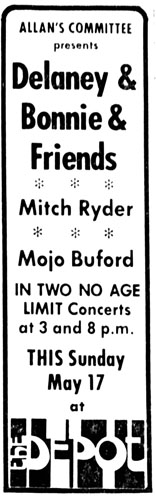
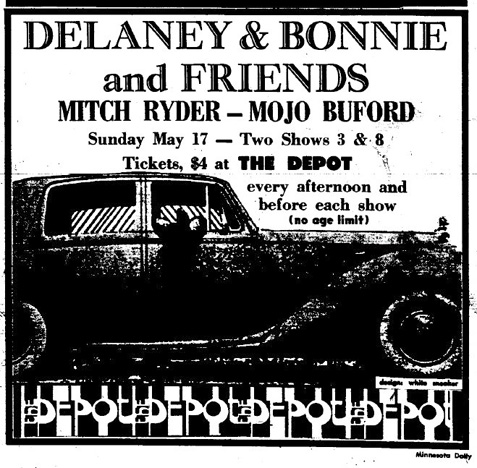
When Delaney and Bonnie cancelled, Ryder moved up to be the headliner. Robb Henry remembers, “Will Agar and I were the guitarists with Mojo Buford on that show. I was really impressed by Mitch Ryder’s guitarist Steve Hunter.”
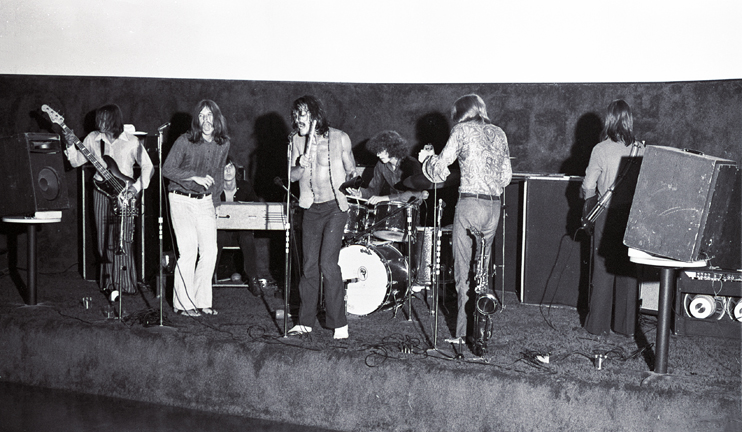
Perhaps because of the substitution, there was a pretty sparse crowd. May 22-23, 1970: Kinks, opened by Crockett. This was the first appearance by the Kinks in the Twin Cities.
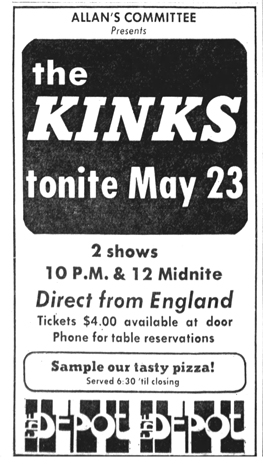
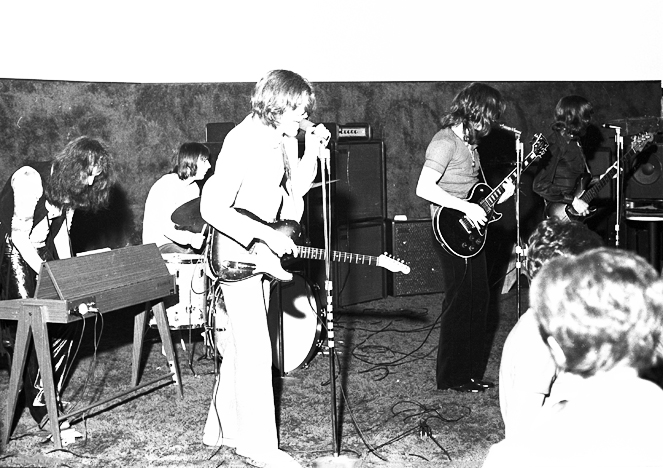
There was a low turnout for the shows, reportedly, as there was a lot going on that weekend. On Friday, May 22, a “Footbridge Festival and Day of Life” took place at the U of M. This event featured David Dellinger, defendant in the Chicago 7 trial; “two mild protests;” rock bands playing on and off all day; and a free concert by Phil Ochs at 8:30 pm. (Minneapolis Star, May 23, 1970) On Saturday, May 23, a “Conference on the Black Panthers: Target of Repression” was held at the Unitarian Church.
Both the Minneapolis Tribune and Minneapolis Star reported on Friday’s show only. Scott Bartell opened his piece with a review of the Depot itself, after the ticket taker complained that the press was giving the place a bad rap.
On the good side, The Depot has beautiful acoustics and brings in very fine groups. Even the local groups are at least pleasant. The drinks are good and not too expensive and our waitress was friendly and attentive. It is clean and, if you are going to drink, tables are a good idea – I’m glad they added more of them to their original seating arrangements.
But the atmosphere is still very much “money” and it does not make one feel warm and receptive. The freedom of rock was not in the air.
If the Kinks, the featured group, are any indication, the performers may feel the same vibrations. Their set was less than half an hour long, and was very fast and without much emphasis…
Last night they seemed to be smoother and faster than in their recordings, almost as though they were in a bit of a hurry… (Minneapolis Tribune, May 23, 1970)
Reviewer Jim Gillespie, who saw only the first show, voiced disappointment in the performance after waiting for six years for the Kinks to come to the ‘Cities. Again he noted the short first set, and said that the group did no material from its “much-touted rock opera” “Arthur (Or the Decline and Fall of the British Empire).” They opened with “The Last of the Steam-Powered Trains,” then the obligatory medley of their older hits. The high point for Gillespie was a tune sung by Dave Davies called “You’re Looking Fine.”
Dave’s voice is harder and more gutteral than Ray’s and eminently suitable for singing blues. His guitar work on the song was the best best he played, piercing sustained notes and staccato runs, perfectly complementing the chopped-off rhythm pattern laid down by the rest of the band. (Minneapolis Star, May 23, 1970)
And this was the first and last time we hear that there is pizza available!
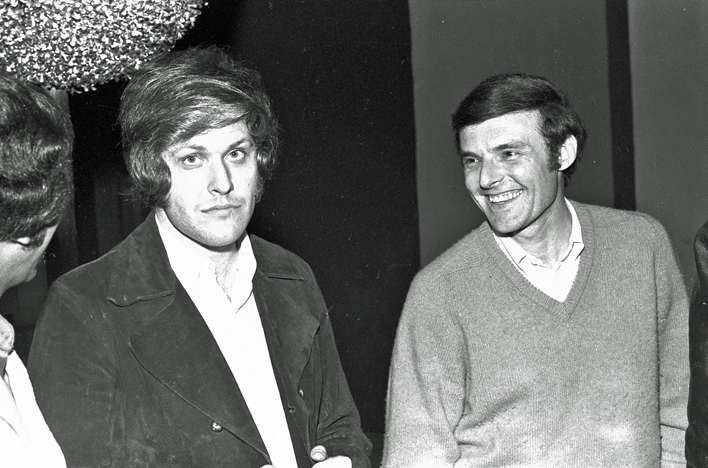
ALLAN’S COMMITTEE You may have noticed that the ads for the last six shows (starting with the second show) referred to “Allan’s Committee.” Danny, as Allan’s partner and co-founder of the Depot, was incensed at this and thought about suing, but Allan’s brother-in-law, Ted Deikel, was brought in as a mediator and worked out an agreement that the phrase “Allan’s Committee” would no longer be used. They also agreed that they would vote on all bands to be booked. (DS) David Roth, a producer for tpt who made a documentary on the 50th Anniversary of the venue in 2020, interviewed Allan, and asked him about the “Allan’s Committee” tag on the ads, and said that Allan didn’t remember that happening. Whatever the case, after those six shows, the phrase was no longer used.