
James Gang
April 11, 1971
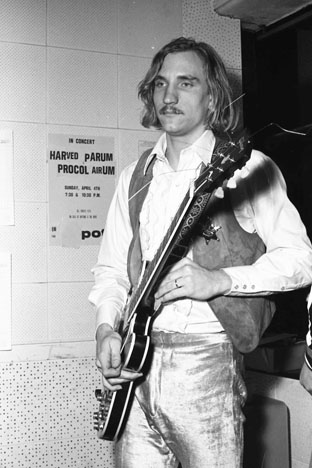
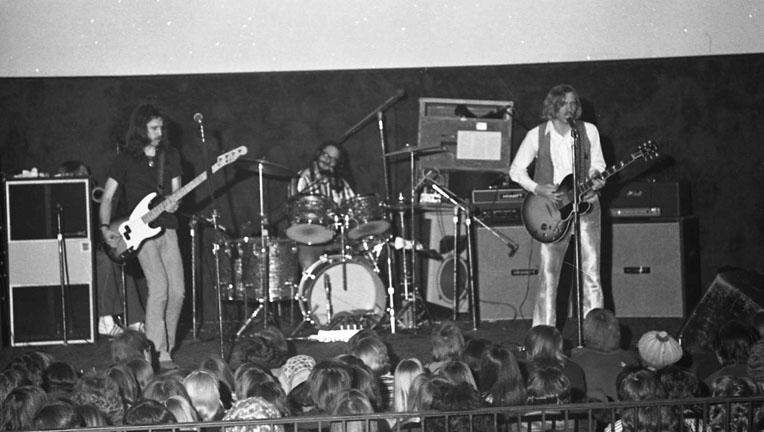
(Jimmy Fox, Dale Peters, and Joe Walsh).
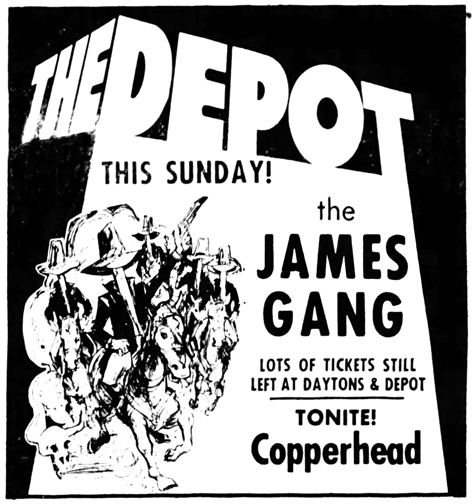
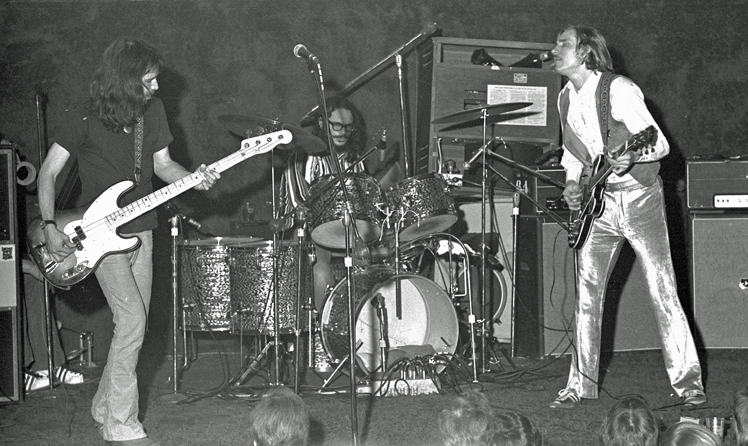
Peter Altman of the Star called the group’s sound an “instant anachronism.” While a year ago it would have been called “good but unremarkable,” “a sort of lower-case version of Led Zeppelin,” by 1971 “The individual is in; the group is out.”
It was easy to see that the Gang members were good players. But their music wasn’t saying anything about our world, or theirs. It had no lyricism, little sensitivity. It was aggressive, not reflective. And so it did not communicate directly. …
And the youthful audience, while friendly enough, never really cared; it was not involved; it will not remember vividly.
On April 11, 1971, Allan Holbert of the Minneapolis Tribune checked in at the Depot after a year of operation. He described the place:
Some nights it’s been a madhouse, with the music – after it finally started – so loud it was painful, with cops wrestling down rowdy rock buffs at the door, with bartenders running out of booze.
Other nights the loudest noise has been the moans of the management people as they added up the lack of receipts from paid attendance.
But the significant thing is that after one whole year, The Depot, that Fillmore Midwest rock palace… is still open.
Holbert also noted that April 1970 was not a great time to launch a new night spot. “The economy had started turning sour. People were being laid off. The ones who still had jobs were forced to cut back on their entertainment spending.” Holbert attributed the success of the club to the hard work of Fingerhut, who “founded and owns most of the action” and was Chairman of the Board. Fingerhut worked seven days a week at the club. In hindsight, Fingerhut said that booking “loud, heavy groups” like Joe Cocker was a mistake, and “if I were to do it over I would start by booking top-40 bands.” Crowd control was a lesson learned as well, as customers found ways to get into the club’s seven entrances and even in the windows without paying.