
Musicland
This article covers a number of subjects that might seem to be a jumble of different record stores and companies, but the common thread is the Heilicher family: brothers Amos and Danny, and Amos’s son Ira. Incredibly, they had dealings with all of the record companies listed below, among their other business enterprises. This is an attempt to trace the histories of these companies, in chronological order, using newspaper ads and the sources at the end of the article as my guide. This may be a convoluted and confusing way to go, for which I apologize – please contact me if you are scratching your head.
- Advance Music Shop/Company
- FM Records
- Great American Music
- Music Lane
- Musicland
- Pickwick
- Sam Goody
- SOMA Records
- Wax Museum
AMOS AND DANNY HEILICHER
Amos Heilicher (the “ch” pronounced like “chew”) was born on November 12, 1917, in Minneapolis. Danny, his younger brother, was born on June 8, 1923. Their father was born in Austria, and their mother was born in Minnesota with Polish parents. The family lived on the North Side of Minneapolis, then a Jewish community. Their father taught Hebrew to countless students.
1933
At age 16, Amos was an entrepreneur; he and Danny used a hand-operated press to print up scorecards and sell for a dime apiece at Gopher football games.
Around 1935, Amos first got into the record business by buying five jukeboxes to put in restaurants and taverns in Minneapolis while attending North High in North Minneapolis. His jukebox business helped put him through the University of Minnesota. His nephew Jamie still has one of the original Wurlizers in his office.

1936
Amos received renewals for licenses for mechanical amusement devices on November 2, 1937; ergo, he must have (first) received the licenses the year before. He was 19 years old in 1936.
The locations listed were:
- 22 N 6th Street, two machines
- 1303 SE 4th, two machines
- 230 N 7th Street
- 1401 E Lake Street
- 705 E Lake Street
- 1521 4th S
- 805 Cedar Ave.
- 2007 Emerson Ave. N
- 900 W. Broadway
- 3200 Bryant Ave. S
1940
On October 16, 1940, Amos registered for the selective service, although the United States was not yet involved in World War II. He cited his employer as the North Star Novelty Co., which was located at his home. He was married and 22 years old and did not serve in the military. He had two children.
1942
Danny registered for the military on June 30, 1942, when he was a 19-year-old student. His obituary said that he was an officer and pilot in the Air Force in World War II and the Korean War. He trained pilots near Spokane, Washington. He would eventually have five children.
1945
ADVANCE MUSIC SHOP
When the records were no loner popular for the juke boxes, they would sell them as used records in “one of their repair depots.” The used-record business became so active that they started selling new records.
On November 25, 1945, Amos and Danny opened the Advance Music Shop at 6 N. 3rd Street, right off of Hennepin Ave. in Downtown Minneapolis. The shop was opened to sell mostly used records from their jukeboxes. The ad in the Minneapolis Tribune announced that the shop carried “a complete stock of the latest records, both new and used. We are the largest operators of jukeboxes in the Twin Cities; therefore, our stock of records is the best in town . . . Our stock of albums is building up. Watch this ad every Sunday for latest releases.”
The ad in the Minneapolis Star dated November 27, 1945, said that the Advance Music Shop had an inventory of 10,000 new and used phonograph records. They also filled mail orders.
The Minneapolis Tribune’s ad of December 2, 1945, announced that the Advance Music Shop just received a large shipment of “Sioux City Sue” by Dick Thomas and “Waiting for the Train to Come In” by Harry James. They also promised to be the “Friendliest record shop in town.”
1946
Advance Record Shop’s ad, Tribune, January 27, 1946, mentioned the following records then available:
- Sioux City Sue
- I Don’t Want a Million Sweethearts
- Halfway to Montana
- ‘Neath the Arizona Moon
- Angry, by Tiny Hill
In February 1946, the Advance Music Shop advertised that it was selling surplus Navy portable phonographs.
By October 1946, the ad read that the name had changed to Amos and Danny’s Advance Music Shop and said they had had a few months of vacation. They listed phonograph supplies for sale, such as needles and record racks, and a long list of the latest records, which were either Big Bands or crooners. Used records were only 9 cents each.
1947
Mercury Records, which supplied the records for his jukeboxes, asked Amos to become a regional distributor.
1948
In March 1948, the advertised list of songs at Amos and Danny’s Advance Music Shop had moved to Country and Polkas.

1949
On January 10, 1949, Amos and Danny announced that they had lost their lease and they were having a gigantic record sale at their Advance Music Shop. Minneapolis Star, January 10, 1949

By March 1949, the Advance Music Shop had found a new location at 1313 3rd Ave. So., across from the Minneapolis Auditorium. The name had changed again to Amos and Danny’s Music Co. Minneapolis Star, March 28, 1949

Curiously, an ad in the Tribune dated December 11, 1949, read:
Record Shop. Complete stock & beaut. Fixtures. To be moved to another location. See Mr. Heilicher at 1313 3rd Ave. S.
1953
SOMA
Amos (known as “Mr. A”) and Danny (“Mr. D”) started the SOMA (Amos spelled backwards), which was a record label, record distributor, and music publisher – not a recording studio. In a lengthy article by Bob Murphy in the Minneapolis Star dated November 1, 1954, SOMA was characterized as a hobby that was started “just for kicks,” that became a business. Amos was identified as president of Heilicher Bros. record distributors, and Danny was vice president.

SOMA was the Heilichers’ third business, next to the Advance Music Co., which at that time operated about 125 jukeboxes. Their second business was the Advance Music Shops, which sold the records from the jukeboxes.
Before the Guthrie was built, the Walker Center Arts Council sponsored outdoor Dixieland concerts at the Walker Art Center, featuring local cornetist and bandleader Paul W. (Doc) Evans. This series began on June 30, 1953, and on August 20, 1953, under contract with the Walker, the concert was recorded and released in 1953. This was the first SOMA record. Following that were “Classic Jazz at Carleton [College]” and “Dixieland Encore” in 1954.

FM RECORDS
Sometime before 1954, Amos bought the defunct FM label. FM was from Hollywood, California, and was first listed in Billboard magazine in February 1947; one source says it operated until 1952. (Most of its records do not have release dates.) Although the company was ostensibly from California, it was apparently run by the Frederick Lee Company, 325 2nd. Ave. S, in Minneapolis, which is now a city building built in 1959. (Billboard, December 20, 1947) In June 1949, Lee Redman was described as an executive of the FM Recording Co. (Minneapolis Star, June 15, 1949)

Amos did nothing with the 400 masters that came with the company until the summer of 1953.
1954
By 1954, the Heilichers were handling the distribution of Mercury, Columbia, and several other labels in four states.
Other than the Doc Evans records, the first 17 records issued were from the FM catalog. It’s possible that Amos released several 45 rpm records with the FM label before he came up with SOMA.
At the founding of SOMA, the Heilichers had a rule that the tunes recorded must be “old time and standard.” They issued mostly polkas, country/western, and jazz, which included Dixieland. Most of the artists on FM were from Minnesota, except perhaps Lulu Belle and Scotty, who were from Canada, and Robert Rheims. Many of the artists were from the KSTP Sunset Valley Barn Dance show.
Other FM artists included:
- Elmer Scheid from New Ulm
- Slim Jim Iverson, singer and radio entertainer
- Fezz Fritsche and his Goosetown Band
- Jerry Dostal and his FM Recording Orchestra
- Dale Simons and his Blue Denim Boys, from Winona
As they grew, bands would make tapes at their live performances, and flood the Heilichers with their material, hoping to get a recording contract. Supposedly, Variety claimed that it was a hot time for old time bands. However, slow, sustained sales was the goal at first. A sudden big hit would be a headache, since it would be imitated by larger publishers with much larger means of distribution. If they did get a tune that seemed headed for sales of over 100,000, they would pass it on to one of the large companies, as a favor to the company, the artist, and themselves. Big names like Frankie Yankovic and Whoopie John recorded for the big labels.
Recording and pressing of records was done by Kay Bank studios, according to the November 1954 article. Amos and Danny were shareholders of Kay Bank, owned by Vern Bank. Printing of covers was done locally. Only the stampers for making records had to be done elsewhere.
The catalog of songs as of November 1, 1954, was 32 tunes.
(Bob Murphy, Minneapolis Star, November 1, 1954)
1955
The following makes one wonder why it was illegal to have pinball machines, and why the providers of the machines weren’t prosecuted?
About $1,200 worth of pinball machines were destroyed today on court order. Wielding the sledgehammer is Jake Sullivan, head of the police morals squad. Both machines were owned by Advance Music Co., 1313 Third avenue S. They were confiscated from Sportsman’s’ Cigar store, 420 Second Avenue S., and from Anchor Inn, 810 E. Franklin Avenue. Louis Seltzer, owner of the cigar store, was sentenced to 30 days for maintaining a gambling device. Gustav A. Bodin, 38, an employee at Anchor Inn, was fined $100. Minneapolis Star, April 12, 1955
The Heilichers made distribution deals with RCA, Columbia, and other labels. overseeing a retail distribution network that extended across the Dakotas, Nebraska, and Michigan’s Upper Peninsula. The Heilichers’ business model emphasized “rack jobbing” — i.e., running record departments for dime stores, department stores and other retailers, expanding sales of singles and LPs into new environments.
At the time, the Heilicher companies operated out of a “ramshackle” 3 1/2 story 1906 building at 119 N. 9th Street in Minneapolis, which had 40,000 “bad” feet of space. At the time, there was a rule that a distributor could not also be a retailer, so there were two operations in the same building, around the corner. One had the 9th Street address, and the other was given as 29-35 Glenwood Ave., but in reality they were the same building.
1956
MUSICLAND
Terry Reed Evenson (1930 – 2004) opened the first Musicland store at 503 Hennepin Ave. on March 23, 1956. He had run a music shop in his hometown of Cloquet before serving in the Korean War (1953-1955), where he played in his army unit’s band. He also played in a jazz band while attending the University of Minnesota. The store’s motto was “From classics to pops, our selection is tops.”

503 Hennepin Ave. was in the building formerly known as the Hale Block. In October 1954 there had been a terrible fire in the three-story section of the building (on the corner of 5th and Hennepin), and it was repaired only to two stories.
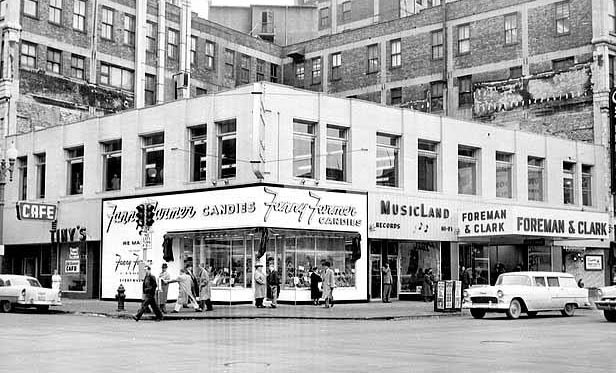
22 So. 7th Street in Downtown Minneapolis appeared as a second Musicland store on December 9, 1956. This was a location of Century Camera during that time, so the two companies may have shared space.
RECORD LANE
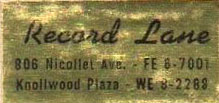
Record Lane appears to have opened at 806 Nicollet Ave. in Downtown Minneapolis in about November 1956. It was apparently owned by Sol Stone, until it was purchased by Manny Swatez in 1957. Manny was Amos’s brother-in-law. This location existed until about August 1963. Permit records indicate that the building was demolished in December 1965.
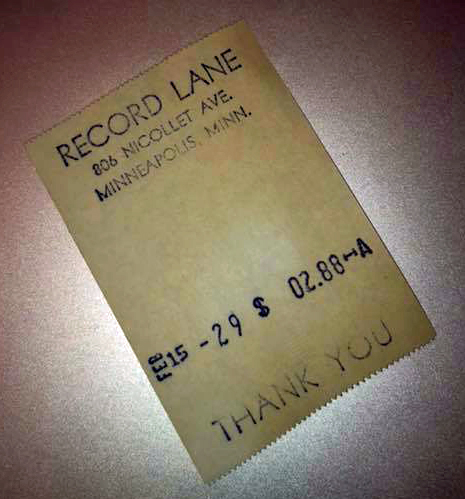
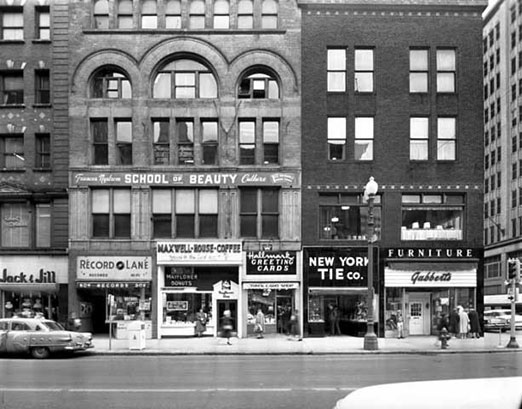
A second Record Lane store opened in Knollwood Plaza Shopping Center in St. Louis Park – the address was 8428 Highway 7. It was located at the west end close to Powers. This was the first record store at Knollwood, complete with listening booths. Leo Fine was one of the managers there before he opened Park Music.
1957
A third Musicland store, located at 7th and Wabasha in St. Paul, began appearing in ads on August 23, 1957, in the St. Paul Recorder.
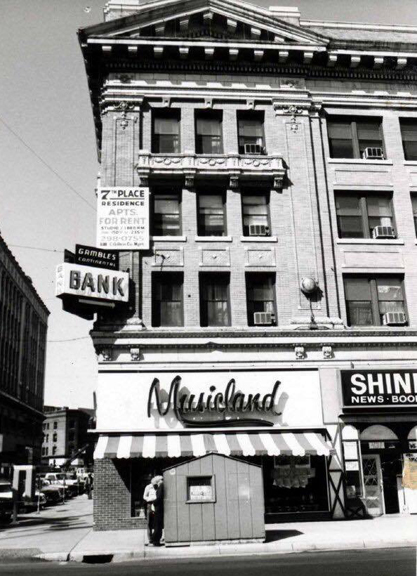
In March 1957, Manny Swatez purchased both Record Lane stores from Sol Stone for $40,000. Manny had co-owned the Swatez Department Store at 1229 Olson Memorial Highway, but it was being demolished for the Glenwood Redevelopment Project. (Minneapolis Star, March 14, 1957) Manny advertised extensively in the St. Paul Recorder, a newspaper geared toward the black community.

1958
In 1958, Terry Evenson hired Grover Cleveland Sayre, Jr. (1929 – 1985), college buddy and bass player in his band to join him in his Musicland venture. Sayre registered for the military in 1947 at the age of 18 while he was still in high school and served in the Korean War. On September 19, 1958, Musicland incorporated with partners Evenson, Sayer, and Robert A. Jaeger.
1959

North Dakota-born singer Bobby Vee released his first SOMA hit, the Buddy Holly-inspired “Suzie Baby.” When the single emerged as a regional smash, Liberty Records licensed the master for national distribution and acquired the singer’s contract by year’s end.
By May 1959, the address of the 22 S Seventh Street Musicland store became 12 S. Seventh Street, AKA 632-635 Hennepin Ave. It is unclear if this was a move or an expansion. Permit cards indicated that this building was the old Hotel Majestic, built in 1896. This 7th and Hennepin location was the flagship of the Musicland stores. The building was demolished in 1979. Here are a few photos of the store:


1960
Despite Amos’s desire to release only old time and standard material, SOMA came to stand for rock ‘n’ roll, some in its rawest form. With the money earned from Bobby Vee’s Liberty deal, SOMA licensed the Fendermen’s rendition of the classic “Mule Skinner Blues” from Wisconsin label Cuca. The record sold over a million copies and reached No. 3 on the Billboard pop chart.
1961

1962
A Record Lane store opened at Apache Plaza prior to mid-January, 1962, as evidenced by the sales slip attached to this wonderful picture. Unfortunately, it is unattributed.

One of Evenson and Sayre’s bandmates was commercial and wildlife artist Louis Raymer. Raymer was said to have designed the iconic Musicland logo, first seen in about 1962. Said Louis’s son Fletcher, “He said it was easy: just draw a circle with a hole in it.” (Louis Raymer was also my father-in-law for a few years…)


Starting in November 1962, ads started mentioned both Record Lane and Musicland.
1963
CODA DISTRIBUTING
On July 5, 1963, the Minneapolis Star reported that the Heilicher Brothers had purchased Coda Distributing for an undisclosed amount. Through this acquisition, the Heilichers now had distribution rights to these additional labels:
- Warner Bros.
- Mercury
- Phillips
- Smash
- Folkway[s]
According to previous information, however, the Heilichers had been the distributors for Mercury as far back as 1947.
The article went on to say that the Heilichers at that time handled 80 labels in six states.
A search for Coda Distributing found them operating at 47 Glenwood Ave. from May 1958 to February 1960.
RECORD LANE AND MUSICLAND
Record Lane had vacated its first store at 809 Nicollet Ave. in about August 1963. Permit records indicate that the building was demolished in December 1965.
In August 1963, an ad indicated that Record Lane and Musicland had merged. Listed were ten stores, including:
- Apache Plaza (Record Lane), opened in October 1961
- Knollwood Plaza (Record Lane)
- 12 South 7th (Musicland)
- Har-Mar Mall (Record Lane)
- 439 Wabasha, St. Paul
- 1327 4th Street SE (Record Lane)
- Duluth (Musicland)
- Eau Claire (Musicland)
- St. Cloud (Musicland)
- 7963 Southtown Center, Bloomington (soon, it said) – Record Lane

Record Lane in Southtown opened on September 26 – 18, 1963.
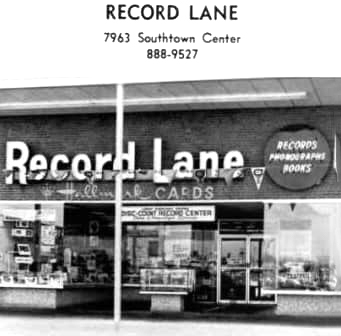
This merger was verified in an article from 1964 that stated that the Heilicher Brothers now owned and operated four Record Lane stores and six Musicland stores in the Twin Cities and neighboring states. (Minneapolis Star, August 11, 1964)
J.L. MARSH
One of the players that became a major part of the Heilicher/Pickwick organization was J.L. Marsh. Although it is unclear just who J.L. Marsh was, the first ad for the company pops up in December 1953 as a seller of colorful plastic radios. The address was 403 in the Wilmac Building, in the days when everyone knew where the Wilmac Building was. In fact, it was located at 719 Nicollet, quite a pricey piece of real estate in Downtown Minneapolis.
By April 1955, it had moved to 528 Hennepin Ave.
But by September 1956, it had relocated once again to 29 Glenwood Ave. N. That address is familiar because it was the same address where the Heilichers were operating. We know that by October 1962, Amos Heilicher had a controlling interest in J.L. Marsh, but when he acquired that interest is unclear. Maybe the move to the Glenwood building is a clue.
In December 1959, J.L. Marsh announced it was going out of business, and finally revealed that it was a wholesale distributor, selling furniture, appliances, jewelry, toys, sporting goods, etc. The store was located on the second floor of the Glenwood building.
But the company never really did go out of business. On October 8, 1961, the company advertised for staff for a card and record shop to be opened soon at Apache Shopping Center. The contact address given was 119 No. 9th Street, the alter ego of the Glenwood building. It is unclear whether a J.L. Marsh record store actually opened at Apache.
In 1963, Manny Swatez, general manager of J.L. Marsh, was appointed vice president of that company. (Minneapolis Star, October 7, 1963) On the same date, the company was described as a record merchandiser.
PICKWICK
The first ad for a record under the Pickwick record lands on December 15, 1963: A John F. Kennedy Memorial Album, available at F.W. Woolworth’s in Downtown Minneapolis. Pickwick Records entered the LP market in 1957 with low-priced records, beginning with its Design label. Pickwick was originally formed as Pickwick Sales Corporation in 1950 by Cy Leslie and marketed primarily children’s records. In 1964, Pickwick records show up in a Target ad. The new Pickwick series of low priced LPs was introduced at Dayton’s in June, 1965.
SURFIN’ BIRD
Amos’s son Ira has been credited for having the influence to bring hit records to Amos and Danny’s attention. While still a student at North High School in Minneapolis, Ira operated a band-booking agency, and would bring bands to a committee of SOMA staffers, which would vote on which acts the label would release.
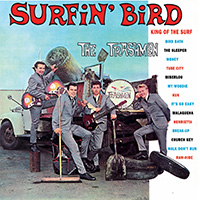
One of these must have been the most famous and/or gawdawful song to come out of SOMA, “Surfin’ Bird.” It was recorded by the Trashmen: Tony Andraeson, Steve Wahrer, Dal Winslow, and Bob Reed. Much has been written about the history of this song and this band, so I won’t go over it now. But when they recorded their audition record for Vern Bank at KayBank Studios, Vern sent it over to Amos with a note that read, “’The Bird’” is the worst I’ve ever heard. Must be a hit. Call me if you’re interested. Vern.”

Amos had to literally pull it out his trash can when it caught on at the sock hops, and the song went like gangbusters. It entered Billboard’s Hot 100 on December 7, 1963, and reached Number 4 on the chart on January 25 and February 1, 1964. Steve Waher was flown out to be on American Bandstand, where the poor guy was left with no rehearsal time and left to his own devices to improvise “The Bird.” The boys got no royalties because, unbeknownst to them, the song was a mashup of two other songs (“The Bird’s the Word” and “Papa-Oom-Mow-Mow” by the Rivingtons), but everyone knows that. But it became a cult classic, and is being used in movies and TV shows over 62 years later.
And it was cool to have your own SOMA record player to play the Upper Midwest’s biggest hits!

1964
Another song brought to Amos by Ira, who had produced it, was “The Crusher,” by a local group called the Novas. Amos put his foot down and called it “a bunch of garbage.” The novelty song was picked up by Parrot Records and then by London Records in the U.K. The song reached No. 88 on the Billboard chart and has staying power today. In a 1965 interview with the Minneapolis Tribune’s Will Jones, Amos said he was still kicking himself for turning it down.
Also in 1964, the Gestures from Mankato came out with their hit “Run, Run, Run” on the SOMA label, which reached No. 44 on the Billboard chart.
Evenson and Sayre sold their interest in Musicland to the Heilichers, who had supplied Evenson with prerecorded music since his early days in Cloquet. Evenson went on to start a chain of greeting card stores, which he eventually sold to Hallmark. Sayre stayed with Musicland until 1981.
Musicland merged with J.L. Marsh in 1964. The roles were:
- Musicland was the retail end, and by August 1964 they had six Musicland stores in the Twin Cities and neighboring states. At one time there were 1,300 Musicland stores. At their peak, Heilicher’s companies accounted for about 20 percent of all recordings sold in the United States.

- J.L. Marsh was the rack jobber, providing records to department stores, supermarkets, and department stores. They made sure the supplies were stocked, and reported back as to what records were selling and what were not. In 1964, Marsh serviced about 120 outlets.
- Heilicher Bros., Inc. was the wholesale distributor of records for a five-state area. They also distributed Voice of Music stereo products, Sony TVs and radios, Pilot stereos, and Roberts tapes. They also began importing musical instruments from Japan.
The Heilicher Brothers still owned the Advance Music Co., but were not active in its operations.
And the Heilichers owned Midwest Auto Photo, where customers could make coin-operated photocopies at machines in four states.
By 1964, Amos was serving his third term as president of the American Record Manufacturers and Distributors Association. As such, he had testified before the FTC several times about developing a price code and preventing other unethical, if not illegal practices among record dealers.
(Minneapolis Star, August 11, 1964)
1965
NEW BUILDING
In 1965, the Heilichers built a new headquarters at 7600 Wayzata Blvd. in Golden Valley with about 100,000 sq. ft. of warehouse space. The warehouse didn’t only hold records, but also tapes, cassettes, posters, musical instruments, stereos, and books.

A 1969 article described the “new” building:
At the front of the modern, brown brick building are the sales, promotion, accounting, and executive offices of the company. At the back is the block-long warehouse are for the Heilicher and Marsh companies.
On 70,ooo square feet of space sit row after row of shelves containing, on any given day, form $2.5 million to $3 million worth of LP records, tapes, hi-fi equipment and musical instruments.
The Heart of the Heilicher distribution method, and a major factor in its success, is the computer system for keeping tabs on sales and inventory.
The system, developed largely by Danny, is based on a two-part ticket that’s put on every record that leaves the warehouse. When a record is sold in a retail store, the clerk removes half the computer-punched ticket. Each day all the tickets are returned to the Wayzata Blvd. headquarters. Computers read these tickets and print the information on punched cards.
With this information other computers decide what stores should receive what records, what should be taken out of stores, and, in addition, they print the orders and invoices. The system is so efficient that it never takes more than 24 hours for sold-out item to be restocked.
All this on a Univac 9200 computer for a company expected to do about $55 million in business in fiscal 1969
(Minneapolis Tribune, January 26, 1969: Brothers’ Record is Hit in Business, by Allan Holbert)
Jamie Heilicher adds that the computer was housed in a 3,000 sq.ft. room, where a person (this part was not automated) fed the tickets into the computer to tell it what records had been sold. There was a sense of urgency about the process, because albums went in and out of fashion very quickly, and stores had to be replenished with popular albums practically overnight. It was an ideal job for kids from St. Louis Park and Golden Valley, first-ring western suburbs of Minneapolis where the Pickwick building was located.

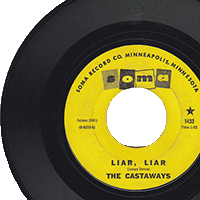
And once again in 1965, SOMA came out with a national hit, “Liar, Liar,” by the Castaways, which reached No, 12 on the Billboard chart. Ira had championed this record to the SOMA committee.
1966
The last ad found for Record Lane-Musicland was on March 20, 1966. The stores open were:
- 7963 Southtown Center, Bloomington
- 12 South 7th (Musicland)
- Apache Plaza (Record Lane)
- Knollwood Plaza (Record Lane)
- Har-Mar Mall (Record Lane)
- 7th and Wabasha
- Duluth (Musicland)
- Fargo
- St. Cloud (Musicland)
- Omaha
1967
Pickwick International was now a music and book production, distribution, and merchandising corporation with 300 retail outlets, headquartered in the Wayzata Blvd. building
1968
MERGER: PICKWICK AND HEILICHER
On March 12, 1968, it was announced that Pickwick International planned to acquire Heilicher Bros. Inc. The plan would provide Heilicher, a privately-owned company, a means of going public. Management of both first would remain the same. (Minneapolis Tribune, March 13, 1968)
According to the Pickwick prospectus, dated September 26, 1968, Pickwick acquired the Heilicher company in exchange for 613,289 shares of Pickwick stock. (Minneapolis Tribune, January 26, 1969: Brothers’ Record is Hit in Business, by Allan Holbert)
By November 11, 1968, the merger was completed, and Amos was identified as the president of the combined Pickwick International, Inc. This provided Heilicher a means of going public. Pickwick, now an over-the-counter stock, had an application in for listing on the American Stock Exchange.
Here is the rundown of companies:
- SOMA Records distributed Midwestern talent. [The article said “records talent,” but SOMA was just a label, not a studio.] At the time, Amos was quoted as saying he wanted to see more activity out of SOMA, which had been almost inactive during the merger period. [The SOMA masters were sold at the time of the merger.]
- Pickwick Records was run from New York by Seymour Leslie. The company “is advertised as the paperback of records and has done well by buying up old tapes by such performers as Sinatra and reissuing them on their budget label.”
- Heilicher Brothers was the distribution branch.
- J.L. Marsh, Inc. was the rack jobber, supplying and servicing record departments in independent and chain stores such as Dayton’s, Target, Gamble-Skogmo, and F.W. Woolworth. Marsh also owns Musicland retail record shops.
- All Records distributed primarily singles.
Minneapolis Star, November 11, 1968
Shortly after the merger, Amos was named president of Pickwick, Cy Leslie was named Chairman of the Board of Pickwick, and Dan Heilicher was elected president of Heilicher Bros. (Minneapolis Star, December 17, 1968)
On July 28, 1968, Musicland Stores were listed in an ad at:
- 12 So. 7th St., Minneapolis
- Knollwood Plaza
- Apache Plaza
- Southtown Center
- 7th and Hennepin (Budget Store
- 7th and Wabasha, St. Paul
- Har Mar Mall, St. Paul
- St. Cloud
- Duluth
- Fargo, North Dakota
- Omaha, Nebraska
- Fort Dodge, Iowa
1969
A long article on the Heilicher Brothers from January 1969 describes Pickwick as
in what could be called the “paperback area of the record business.” It is one of the largest independent merchandisers of economy-priced recordings in the United States. It buys from major record companies the rights to recordings made popular several years ago and reissues them on a different label to sell at $1.89 instead of the original $4 or $5.
J.L. Marsh was the rack jobber and also operated the then 14 Musicland stores in the Upper Midwest.
SOMA was described as a record-producing company, specializing in local talent. Danny said “SOMA is not a major part of our over-all business,” but mentioned the big hits of the mid-sixties. With SOMA, the concept of the completely vertical operation was achieved:
- SOMA produced the record.
- Heiicher Bros. bought the record from SOMA.
- SOMA sold it to J.L. Marsh.
- Marsh sold it to a Musicland store or an outside record department in a store.
According to the article, Amos and Danny’s offices are separated by that of a mutual secretary, who refers to them on the phone as Mr. Daniel and Mr. Amos. The brothers share ownership of a 48-foot launch on Lake Minnetonka. Danny said they pay no attention to titles.
Minneapolis Tribune, January 26, 1969: Brothers’ Record is Hit in Business, by Allan Holbert
1970

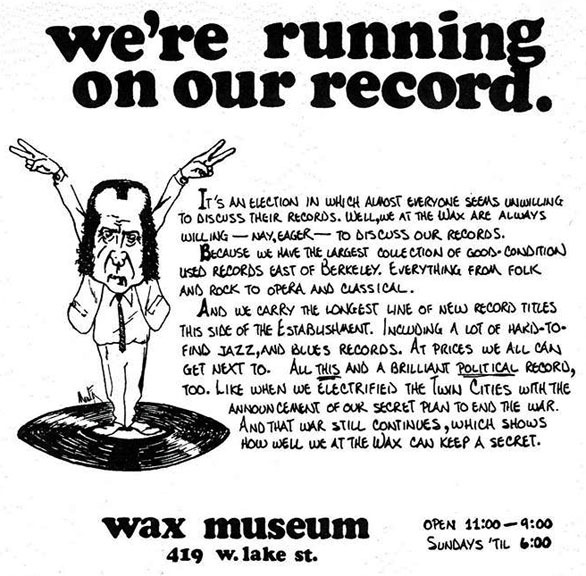
WAX MUSEUM
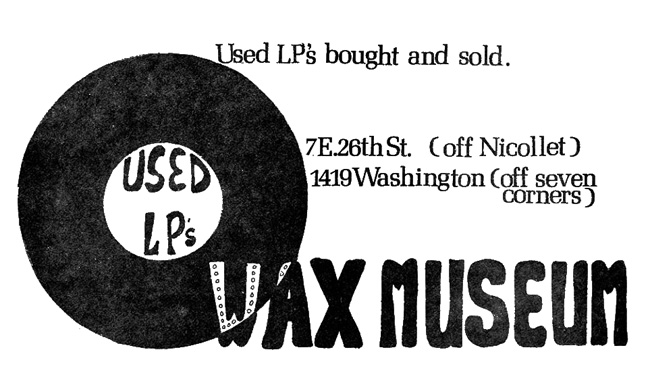
Dan Scholl and David Devoy opened the Wax Museum in in 1970 in what was originally a small consignment store at 7 East 26th Street at Nicollet Ave. in Minneapolis. They sold out the consignment goods and turned to selling used records.
In 1970, they added a store at 1419 Washington Ave., off Seven Corners.
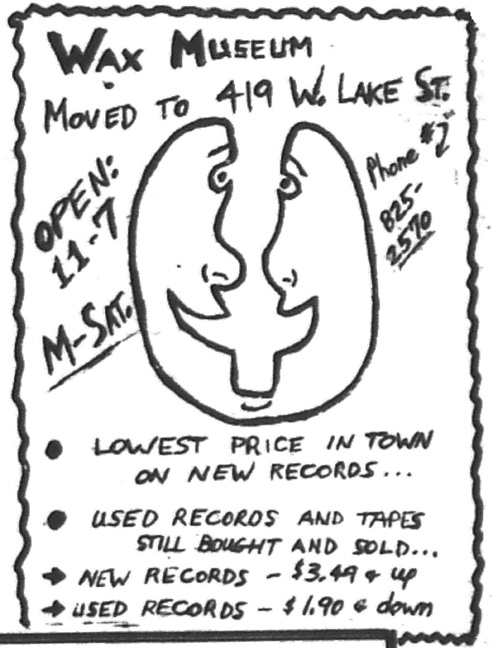
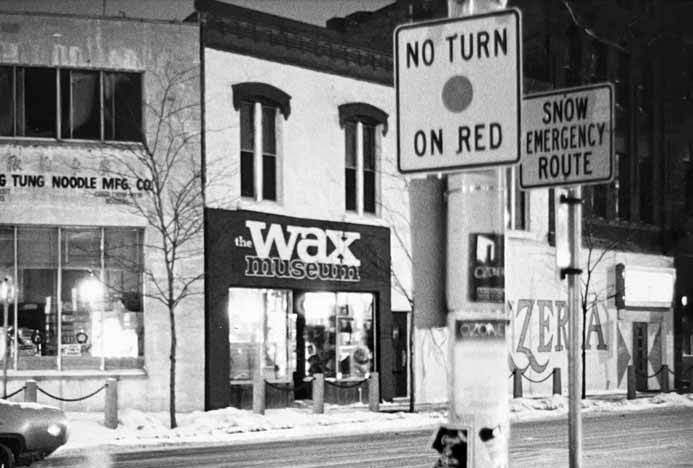
By December 1970, Wax Museum stores had consolidated at 419 West Lake Street.
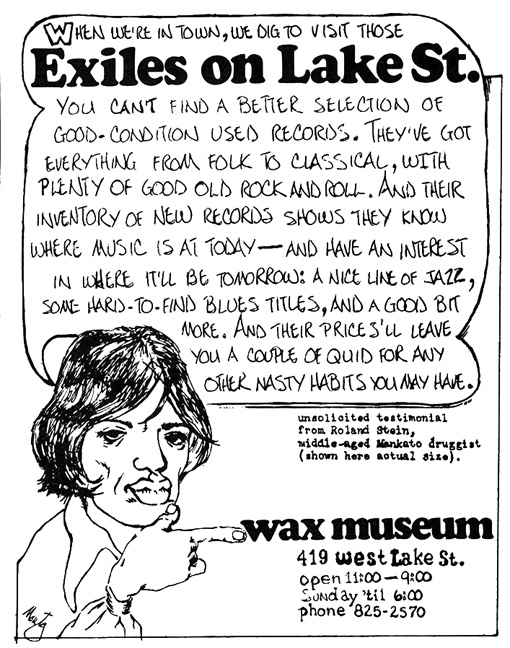
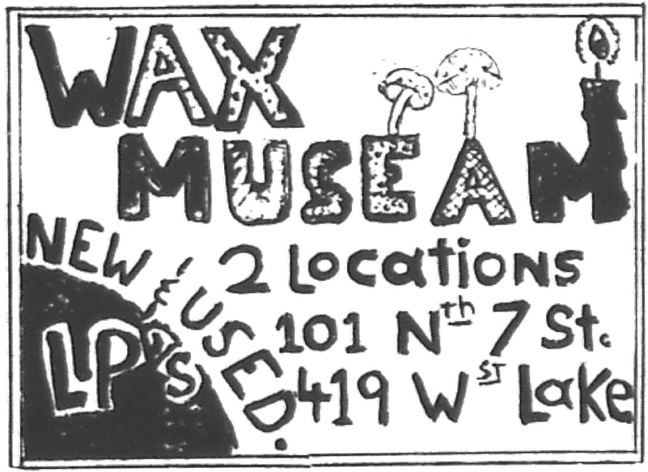
An ad from June 1971 indicated that a second Wax Museum store at 101 North 7th Street had been opened.
1971
On December 29, 1971, Pickwick International, Inc. was listed on the New York Stock Exchange. That year it sold its musical instruments division at a net loss.
Amos and Danny still owned the Advance Music Co., keeping them in the jukebox business and bringing in about $1 million a year.
1973
A 1973 list of Minnesota record distributors lists perhaps hundreds of labels – some obscure, some large – distributed by “Heilicher Bros. Inc., Division of Pickwick International, Inc.” Since distribution could make or break a record, this predominance made Amos and Danny very wealthy and powerful men in the recording industry.
1977
TRAGEDY FOR THE HEILICHERS
In October 1976, Amos, his family, and Daniel Gittelman, Pickwick Vice Chairman sold their 450,000 shares of Pickwick stock (11 percent) to Hartz Mountain Co. for about $14.75 per share. This abrupt action came about in part because of disagreements with Leonard Stern, president and CEO of Hartz. Stern was also the chairman of Pickwick’s executive committee and owned 6 percent of Pickwick’s stock. Amos was reportedly angered by Stern’s criticism of his management.
On January 19, 1977, the news came out that Pickwick was on its way to being sold to the American Can Co. for $23 a share ($102 million). Because Amos had sold out “too soon,” as the headline declared, he lost $3.7 million. (Minneapolis Star, January 20, 1977) Actually, he didn’t lose anything; he just could have made more by waiting. Thus are the vagaries of the stock market.
The merger between Pickwick and American Can took place on June 7, 1977. Pickwick was absorbed into a new subsidiary called ACP, Inc. The Heilicher brothers were out of their jobs and given new ones: industry executive advisors.” The next day, Amos stated that he and Danny “resigned” as president and senior vice-president of Pickwick. Asked if he was satisfied with the new management structure, he replied, “It is as it is.” Unfortunately, both brothers were under contract until October 1981, with non-compete clauses. Amos said he was “very anxious to proceed with other, exciting business ventures” unrelated to the music business. (Minneapolis Star, June 8, 1977)
Also in 1977, Pickwick bought the building at 7500 Excelsior Blvd. At the time of the move, Pickwick was the largest record distributor in the US and UK and had 280 retail record shops. Unfortunately, a Pickwick record generally meant poor quality, both in the recording and the vinyl itself. As one critic noted, it was at one time “one of the largest purveyors of junk records in the world.” Often a record claiming to be by a known artist turned out to be re-recorded by someone else. Pickwick occupied the building until 1996.
1978
SAM GOODY
American Can Company purchased the Sam Goody record store chain. Sam “Goody” Gutowitz of New York City established a small, mostly mail-order, record store in the late 1940s, and expanded to a chain of record stores in 1951. Sam was apparently famous in the fifties and appeared on TV talk shows. In 1959, a group of creditors took over the chain but retained the name Sam Goody. In 1978, the Sam Goody and Musicland stores were incorporated as the Musicland Group.

GREAT AMERICAN MUSIC
Ira Heilicher co-founded the Great American Music retail superstore with his cousin Todd Heilicher (Danny’s son) in 1978. The first store was located at 5151 Central Ave. NE, and opened on February 3, 1978. The building was a renovated clothing store, stocked with 400,000 records. Ads promised a huge stock of 100,000 records and tapes in every category. The store was originally open weeknights until 11 pm and Fridays and Saturdays until 1 am. It was billed as the Twin Cities’ first record supermarket. (Minneapolis Tribune, April 1, 1978)
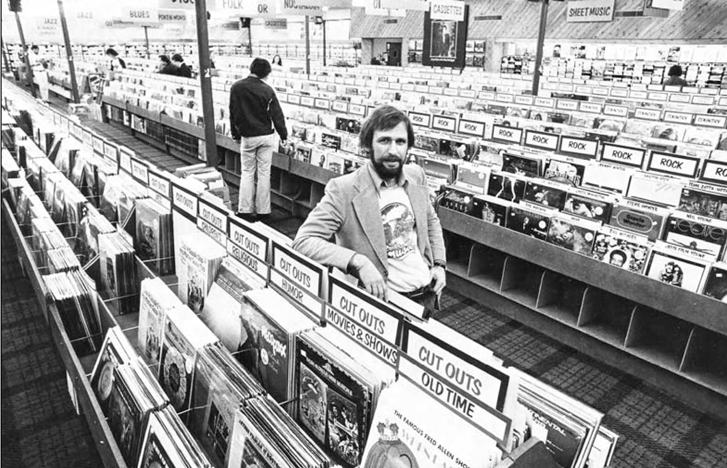
The second Great American Music store, at Har Mar Mall in St. Paul, opened in about April 1978. By January 1979, a third Great American Music store had opened.
1979
Paul Strickland tells us, “The original owners of Wax Museum sold in about 1979 to Lieberman Distribution, who later sold to Great American Music. Sad to see the Lake Street Building gone.” By 1979 there were six Wax Museum stores.
1980
Jeff Kleinbaum says: “Musicland opened at Knollwood in the mid ’60s across from Young Quinlan. It moved to the center of the remodeled enclosed mall in 1980.
1981
An ad published on October 20, 1981, combined Great American Music and the Wax Museum as places to buy tickets to a concert. On October 30, 1981, it was clear that the two companies had merged. At that time there were 13 locations:
The Wax Museum locations were:
- 419 W. Lake Street
- Robin Center, 4100, Highway 52 N.
- 6630 Penn Ave. So. in Richfield
- 1910 University Ave., St. Paul
- 324 Cedar Ave., West Bank, Minneapolis
- 28 S. Fifth Ave., St. Cloud
The Great American Music Locations were:
- 7573 Brooklyn Blvd., Brooklyn Park
- 494 & Lyndale, Bloomington
- 5151 Central Ave. NE, Fridley
- Har Mar Mall, St. Paul
- Signal Hills Shopping Center, West St. Paul
- Maplewood Mall
- Burnsville Center (opened November 1979 as a Wax Museum store)
The 419 W. Lake Street Wax Museum site was sold in December 1981. It became a Great American Music store.
1982
By October 1982, Ira Heilicher was identified as the owner of both Great American Music and Wax Museum stores.
1986
In November 1986, Ira Heilicher owned 17 Great American Music and Wax Museum stores.
The Musicland Group launched a home video chain, first called Paramount Pictures, then changed to Suncoast Motion Picture Company.
1987
Musicland’s president, Jack Eugster, and 15 other senior managers purchased Musicland from American Can Company, and the company became privately-held.
In November 1987, it was reported that Ira Heilicher sold 12 Great American Music and two Wax Museum stores to Trans World Music Corp in Albany, New York. Terms were not disclosed. Ira also announced that he would sell or close two additional Great American Music stores in Robbinsdale and St. Cloud. The Great American Music Co. will change its name and continue to public Buzz Magazine as a joint venture with City Pages. (Minneapolis Tribune, November 21, 1987)
1988
A 1988 ad counted 11 Great American Music Stores:
- Maplewood Mall
- Nicollet Mall
- Burnsville Center
- Northtown
- 3024 Hennepin Ave So. (Uptown)
- 494 and Lyndale, Bloomington
- 5151 Central Ave. No. (Fridley)
- 12460 Wayzata Blvd. (Ridgedale)
- Har Mar Mall (St. Paul)
- 1930 Suburban Ave. (East St. Paul)
- Signal Hills Shopping Center (West St. Paul)
and two Wax Museum stores (419 W. Lake and Dinkytown)
1990
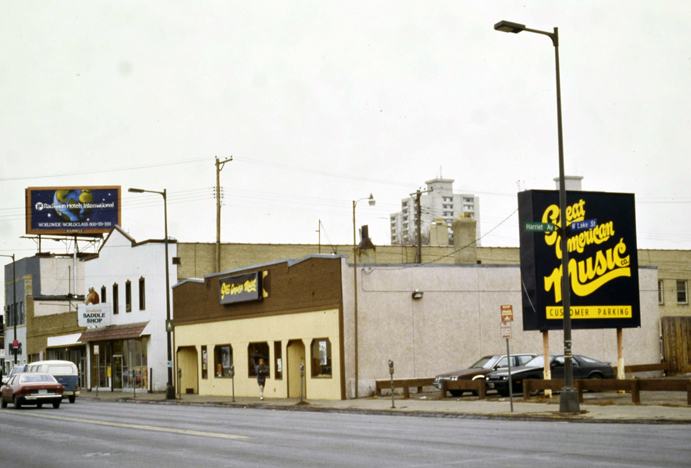
Here’s the Great American Music Store at 419 West Lake Street in 1990. In 1981, this had been a Wax Museum location.
1995
Musicland’s distribution shifted to a new center in Franklin, Indiana. The company sold the building at 7500 Excelsior Blvd. in 1996.
Primerica, formerly American Can, began converting Musicland stores to Sam Goody stores. By December there were only three:
- 705 Hennepin
- Northstar Center
- 323 14th Ave. SE (Dinkytown)
1996
The number of Musicland stores in Minnesota kept shrinking. In January 1996, 705 Hennepin and 323 14th St SE were listed. By May, the Dinkytown store had converted to Sam Goody, leaving only the flagship store at 7th and Hennepin store Hennepin Ave.
There were 14 Sam Goodys in the Twin Cities area, including one at Knollwood Mall.
2001: Musicland was sold to Best Buy for $865 million. For more about the demise of Musicland after the sale to Best Buy, see Wikipedia.
2003: Best Buy sold its interest in Musicland.
2005: Danny Heilicher died on May 23, 2005, at the age of 82.

2006
Musicland, based in Minnetonka, filed for Chapter 11 bankruptcy in New York in January 2006. The company’s assets were sold, and banks were paid in full. Trade creditors received $44 million, but Musicland still owed the vendors about $126 million. (Minneapolis Star Tribune, August 28, 2007)
2008: Amos died of pneumonia on October 12, 2008, at the age of 90.

2011
Ira Heilicher, Amos’s son and integral part of SOMA Records, died on August 2, 2011, at age 65. He had been a heavy smoker.
SOURCES
Amos Heilicher Biography by Jason Ankeny
How Musicland shaped the entertainment scene: Looking Back – Eric Renshaw, Sioux Falls Argus Leader, August 27, 2023
Brothers’ Record is Hit in Business: Allan Holbert, Minneapolis Tribune, January 26, 1969
Heilichers: The Music Men – Minneapolis Tribune, Mike Steele, December 26, 1971
Derik Olson, SOMA Records researcher and collector
Jamie Heilicher, son of Danny Heilicher